Cabrolé
 IC
IC
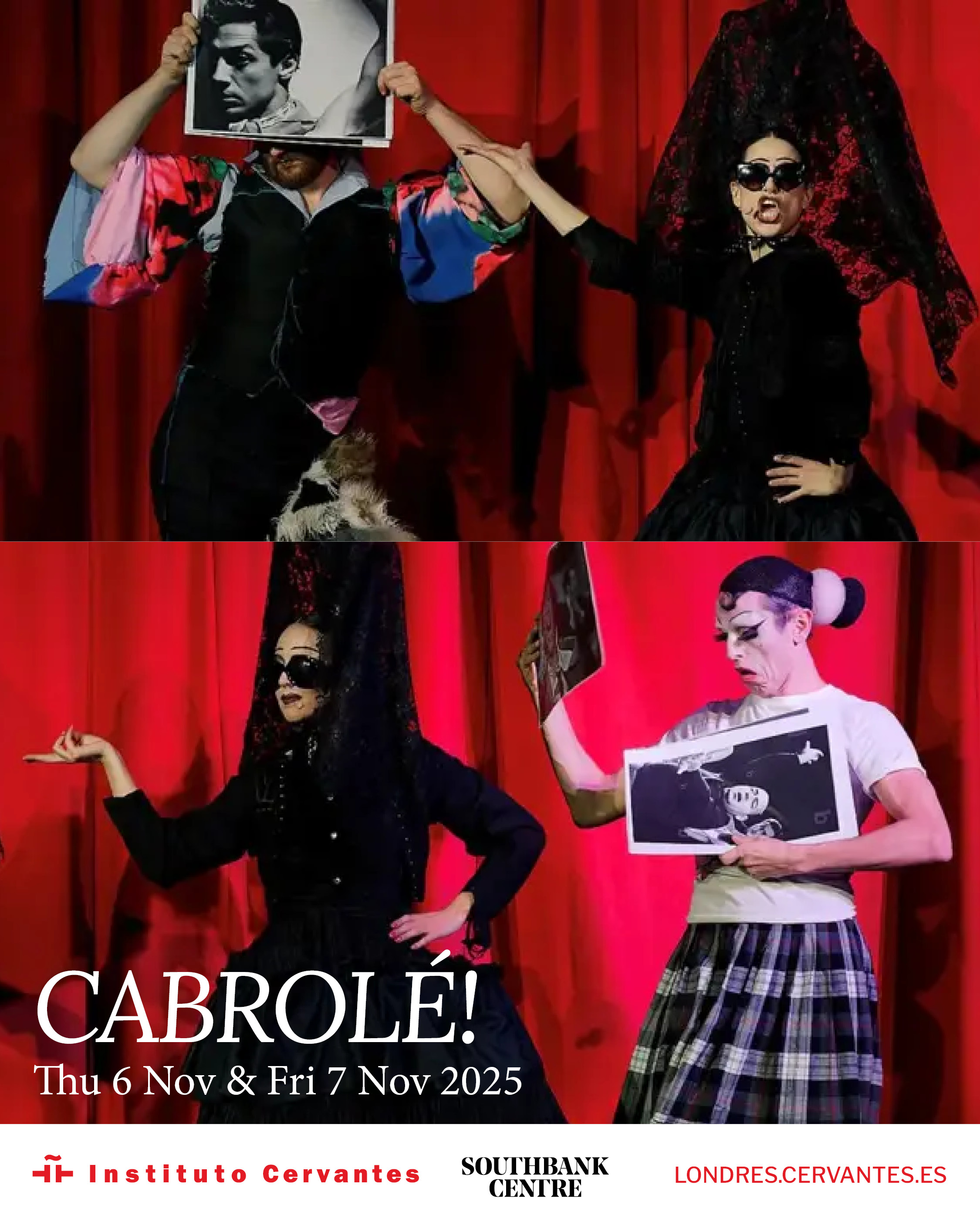
Instituto Cervantes London is collaborating with the Cabrolé show which will offer an evening of dance, song, queerness, joy and community, in a spirit of love, acceptance and self-expression for all.
Flamenco was born in late 19th century Spain from the desire of marginalised and immigrant communities to bring people together and create a new communal language to express themselves. In the bodies, gestures, lyrics and music of flamenco there is a mixture of people and their stories from India, Central America, the African continent, Eastern Europe and the Andalusian gypsy community.
The name Cabrolé comes from the Spanish word ‘cabra’ and the famous ‘olé’, which means brave. Goats are known for their rebellious soul and olé is used to show their appreciation. Cabrolé" is a call for rebellion, on stage and with glitter!
